Get In Touch

.svg)

By Uday Akkaraju
Twice in modern history, healthcare has been within reach of becoming what it was always supposed to be: preventive, affordable, available to everyone.
Twice, it missed.
We were promised healthcare. What we built was sickcare. For a century, the most expensive industry on earth has been organized around a single moment, the moment you become sick enough to need it. The clinic. The waiting room. The specialist. The prior auth and your favorite of all, The deductible. Every line of the system assumes you arrive already broken.
The body doesn't work that way. The body is one thing: Heart, gut, brain, hormones, sleep, mood, immune system, one continuous, interlocking organism that drifts, slowly, year after year, toward decline long before any single number crosses a line.
But our doctors were trained to cut the body into specialties. The cardiologist sees the heart. The endocrinologist sees the hormones. The gastroenterologist sees the gut. No one sees you. By the time the rates and the referrals and the second opinions assemble themselves into a picture, the disease has already arrived.
And then there is insurance, the industry that perfected the trick of selling you a product you can almost never use.
Insurance pays, generously, for cancer treatment, for stents, for surgeries, for the long slow expensive end of disease. It will not, in most plans, pay for what would have prevented any of it. There is no insurance product for staying well. There is only an insurance product for getting sick on schedule.
America spends $5.3 trillion a year on healthcare. Less than 3% of that goes to preventing the diseases the other 97% pays to treat. And 66% of personal bankruptcies in this country are tied to medical bills.
That was the first miss. Healthcare had a chance, in the twentieth century, to be a system that kept people well. Instead, it became the most profitable arrangement in human history for managing the consequences of failing to do just that.

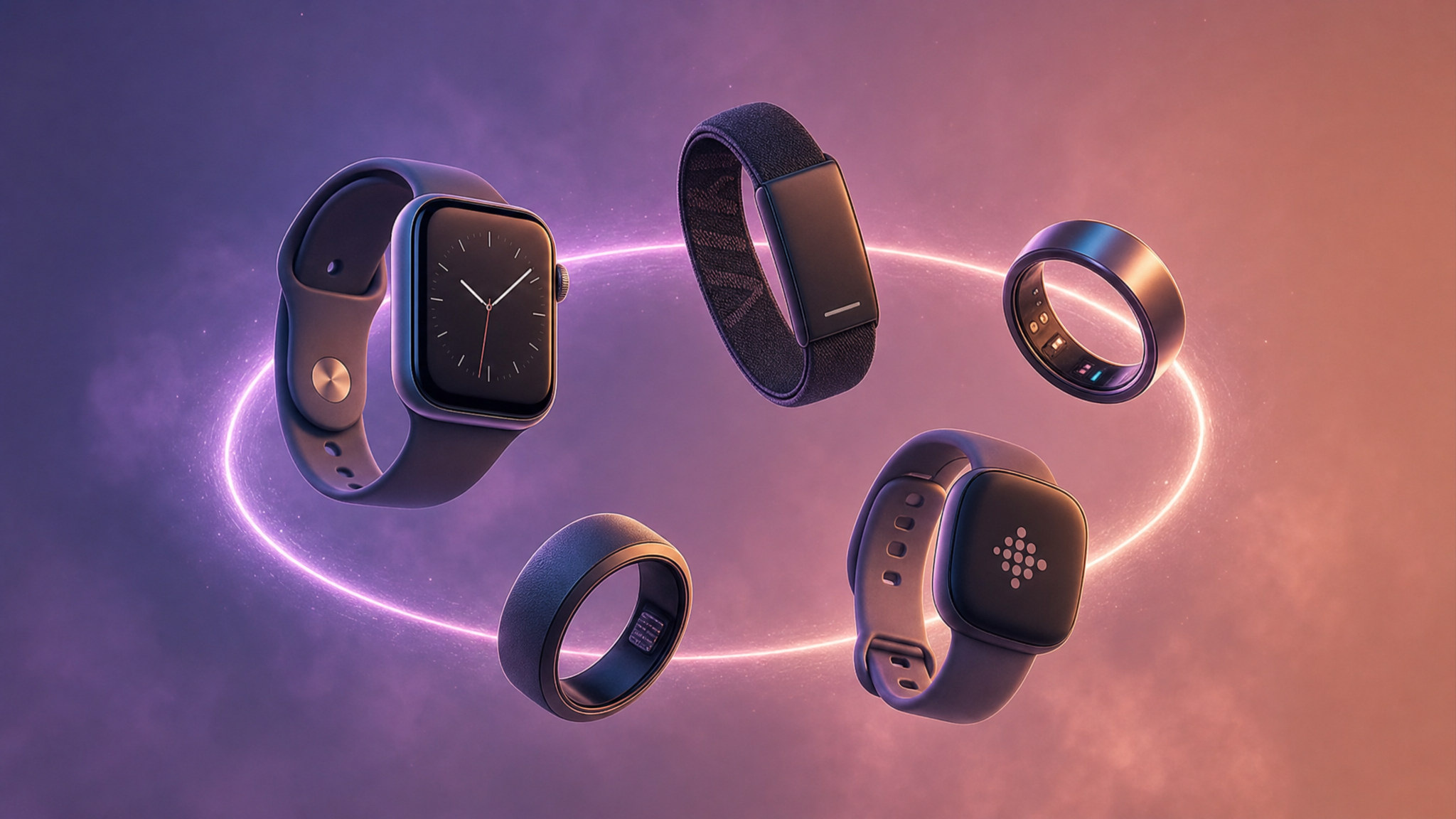
Then came the wearables. And for a moment, it looked like the correction had arrived. A clinic on your wrist. Continuous tracking. We slid on the ring. We strapped on the band. We measured sleep, recovery, heart rate, strain. Something real happened here. Millions of us became students of our own bodies, curious about our own physiology.
Then we paid attention.
A single PPG sensor, pressed against one small patch of skin and asked to read the entire cardiovascular state of a human being. One more device to charge, one more subscription stacked on top of expensive hardware. The cheaper ones are cheaper. The premium ones are premium. None of them, at any price, are looking at the thing that actually decides your future."
Do the math anyway. $500 for a device. $10 to $30 subscription a month, every month, forever, that's $860 per person, year one. For a family of four, nearly $3,500. The same money spent on real prevention could cut each member's risk of chronic disease by 58% for type 2 diabetes alone.
These were supposed to be the tools that democratized health. They became another version of the system they came to replace: expensive, gated and exclusive. Oura is now valued at $11 billion dollars. Whoop, at $10 billion. Combined revenue, over $2 billion a year. After a decade of marketing, wearable adoption has plateaued in the United States at 46%. Smartphones, the curve they were projected to follow, are past 85%.
And there was a quieter miss underneath the obvious one. For a hundred years, medicine has been built around naming disease at the moment it crosses a line. The wearable, for all its sophistication, still looks for the same thing. It looks for the abnormal value, the spike, the moment a body becomes "officially sick." But the upstream variable that actually decides your future, the rate at which your body is changing and declining has been compounding for years by then.
You don't catch the asteroid in the last mile. You catch it in deep space.
Both did real work. But look at them side by side and the same pattern appears. Neither did the work that mattered most. Both were sold as prevention. Both became expensive. Billion-dollar industries. Both measured parts the body instead of seeing the whole picture. Both ended up serving the people who needed them least: the people who could already afford the next premium tier.
Insurance won't pay $500 to prevent a $150,000 cancer. The wearable charged you $500 to track your sleep. Different decade, different shape, same missing thing.
And both made the same category error. They built new infrastructure for a problem that needed no new infrastructure. They asked the patient to come to the clinic. They asked the wearer to buy the band. They asked you to keep adding another visit, another device, another subscription, to a life already saturated with both. That is not how democratization has ever actually worked.
Every time humanity has democratized something: reading, money, knowledge, intelligence or voice, the pattern has been the same. The breakthrough was never new hardware. The breakthrough was leveraging the hardware already there.
The printing press did not invent paper; the internet did not invent the computer; the agent revolution did not invent the cloud, each used what was already there.
Each of these shared two properties. They leveraged infrastructure ordinary people already owned. And they cost less than what they replaced. That is the only way democratization has ever happened.
Healthcare has missed twice. There won't be many more chances. Healthcare's third moment will not be a building. It will not be a band. It will not be a subscription on top of a subscription. It will be something already here, and most importantly, it will be pointed at the years before disease, not the moment of it.
And the math, finally, will work in the right direction. A family that lives with real prevention can save an estimated $1,000,000 over a lifetime, money that goes to education, home ownership, retirement, the things a healthy life was supposed to be for. Scale that across a country. A healthcare system that finally chose prevention would free up $300 billion a year. That is what the third moment is worth.
What do you think it will be?
.webp)

101 Plus (“We,” “Us,” Or “Our”) operates as a technology-driven longevity and preventive care platform, combining health tracking and biomarker insights with unlimited access to a clinician and personal AI Advisor. We are not a healthcare provider, and we do not create any provider-patient relationship. Our AI assistant provides personalized wellness insights based on your data and test results, but this information is AI-generated, may be inaccurate or incomplete, is not FDA-approved, and is intended for general wellness purposes only—not to diagnose, treat, cure, or prevent any disease. Always consult a qualified healthcare professional before making any health decisions, and never disregard or delay professional medical advice based on information from the platform. If you are experiencing a medical emergency, call 911 or seek immediate care.